
Guide
How to Find Businesses Without Websites
For web design agencies, businesses without websites are the clearest possible signal of need. Here is how to find them systematically, qualify the best prospects, and approach outreach with a pitch that resonates.
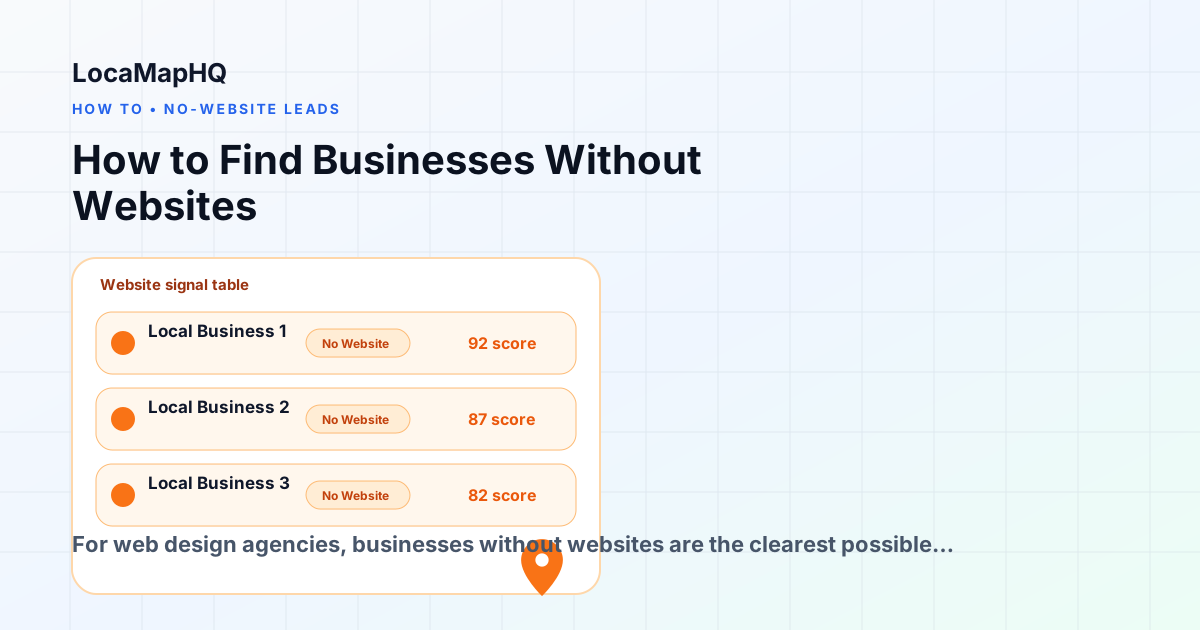
The no-website market is larger than most agencies realize
A meaningful share of local businesses — particularly small owner-operated service companies — have no website at all. They have a Google Maps listing, a phone number, and possibly a Facebook page. They get work from referrals, repeat customers, and walk-ins. Their online presence is minimal or nonexistent.
For a web design agency or freelancer, these businesses represent the clearest possible signal: they have a real business, they have demonstrated demand (reviews, activity), and they have an obvious gap that you can fill. The sales conversation is not about whether they need a website — it is about when.
The challenge is finding them efficiently. This guide covers how to identify businesses without websites at scale, how to qualify the best prospects from the list, and how to approach the outreach conversation.
Why businesses operate without a website
Understanding why a business has no website helps you frame the outreach. The most common reasons:
- They built the business before websites mattered: A plumber who started in 2000 built their customer base through referrals. A website was never part of the model, and the business kept working without one.
- They tried once and it did not work: Some businesses paid for a website years ago, got no results, and decided it was not worth the investment. They do not know that local SEO has changed significantly.
- They do not know how to get started: Many small business owners are not technical. The process of finding a designer, communicating what they want, and reviewing work feels overwhelming. They have never found the right entry point.
- They think they cannot afford it: Sticker shock from past quotes or assumptions about pricing have kept some business owners from pursuing a website.
Each of these reasons represents a different angle for your outreach message. A business that has never had a website needs a different pitch than one that tried and gave up.
How to find businesses without websites: the research methods
Method 1: Google Maps search by city and industry
Google Maps is the most comprehensive source for local business listings. Every registered business appears on Google Maps whether or not they have a website. Businesses without websites appear in the listing with no website link — that absence is the signal.
The manual research process: search for a specific industry in a specific city (e.g., "plumber Chicago"), review the results, and click through each listing to check for a website link. This works, but it is slow at scale. A city with 80 plumbers takes significant time to research manually.
Method 2: Purpose-built lead research tools
Tools like LocaMapHQ automate the manual part of this workflow. You enter a city and industry, and the tool returns results with a no-website flag already applied. Instead of clicking through 80 listings, you see the businesses without websites immediately, sorted by opportunity signals.
This is the most efficient method for agencies that need to build prospect lists at scale. A search that would take three hours manually takes five minutes.
Method 3: Facebook and Yelp search for businesses with no website link
Some businesses have a Facebook page or Yelp listing but no website. Facebook business pages allow owners to list an external website, and many leave this blank. Yelp business profiles similarly show a website field. Businesses where this field is empty or missing are candidates for outreach.
This method works as a supplement to Google Maps research. It catches businesses that are active on social platforms but have not built a standalone web presence.
How to qualify businesses without websites
Not every business without a website is a good prospect. The best prospects combine the no-website signal with evidence that the business is active and generating real customer demand. Qualification signals to look for:
- Google review count: A business with 30+ reviews is actively operating and has served enough customers to generate public feedback. A business with 0 reviews may be inactive or brand new.
- Average rating: A high rating (4.0+) indicates customer satisfaction. These businesses have a reputation worth amplifying — a strong pitch angle.
- Recent reviews: Reviews posted in the last 3-6 months confirm the business is currently active.
- Business category: Service businesses with recurring demand (plumbing, HVAC, dental, auto repair) are stronger prospects than seasonal or low-frequency categories.
- Phone number present: A business with a listed phone number is reachable. No phone number makes outreach harder.
The ideal prospect: a business with 40+ reviews, a 4.2+ rating, recent review activity, a phone number, and no website. That is a business with proven demand and an obvious gap.
The outreach approach for businesses without websites
The pitch for a business without a website is simpler than most agency pitches. You do not need to convince them they have a problem — the problem is visible. What you need to do is make the solution feel accessible and clearly tied to their business goals.
Key principles for the no-website pitch:
- Reference the specific signal: Mention that you found them on Google Maps and noticed they do not have a website. Specificity builds credibility and shows you did real research, not mass outreach.
- Connect the gap to lost revenue: Customers who search online and cannot find a website move to the next result. Frame the website as a tool for capturing those customers, not a branding expense.
- Anchor on their existing reputation: If they have strong reviews, lead with that. They have earned customer trust — a website gives them a way to show that to customers who have not met them yet.
- Keep the ask small: The first step is a conversation, not a sale. Offer a free consultation or a quick call to discuss what a site for their business would look like.
The best industries for no-website prospecting
Certain industries have a higher concentration of businesses without websites. The most productive categories for this type of prospecting:
- Plumbing and drain services: Many are owner-operated and built on referrals. No-website rate is consistently high.
- Landscaping and lawn care: Seasonal businesses that grew organically. Online presence is often minimal.
- General contracting and remodeling: High-ticket businesses with strong referral networks and minimal digital presence.
- Auto repair: Independent shops, especially family-owned operations, frequently operate without websites.
- Cleaning services: Residential and commercial cleaning is heavily referral-based and often completely unrepresented online.
- Specialty food and restaurants: Ethnic restaurants and family-owned diners often have strong community followings but no web presence.
Start with the industries that align with your agency's portfolio and expand from there. Niche expertise makes outreach and client delivery more efficient.
Building a repeatable research workflow
The most productive agencies treat local business lead research as a system, not a one-time activity. A repeatable workflow looks like:
- Pick a city and industry combination for the week
- Run the search using LocaMapHQ or a manual Google Maps review
- Filter to businesses with no website and qualifying review signals
- Save the top 20-30 prospects
- Export and add to your CRM with the specific signal noted
- Run outreach for that batch
- Move to the next city-industry combination
At this cadence, a single researcher can build a pipeline across dozens of markets without the research process becoming a bottleneck.
Practical block
No-website lead table
| Business type | Signal | Why it matters | Outreach angle |
|---|---|---|---|
| Home service | No website listed | Customers cannot inspect services | Missed calls from search |
| Local professional | Strong reviews only | Reputation exists but lacks a home | Turn reviews into a website |
| Owner-operated trade | Phone-only presence | Hard to compare against competitors | Simple service site |
Workflow for turning this guide into a prospect list
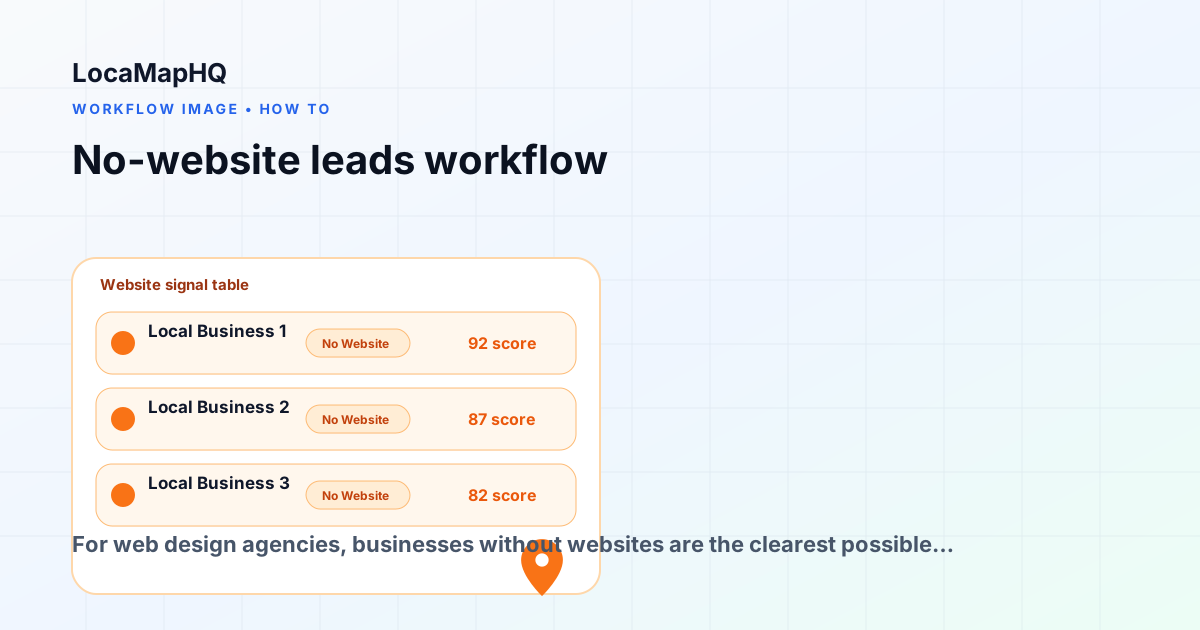
Use the article topic as a focused research lane: choose one city, one local business category, and one visible opportunity signal before saving prospects. The goal is a reviewed list with notes, not a raw export. Keep no-website, weak-website, local SEO, and niche-fit opportunities separated so the follow-up angle stays specific.
Lead quality checklist for this topic
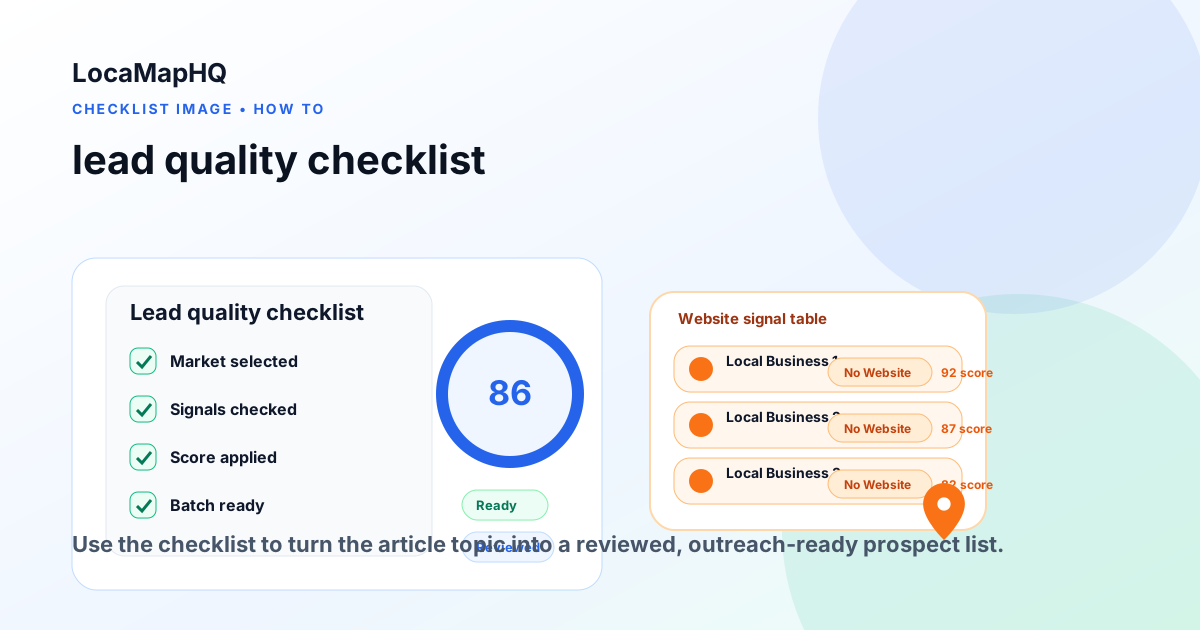
Before a business enters an outreach batch, confirm that the signal is visible, relevant, and tied to a service your agency can provide. Look for active businesses, clear contact paths, strong reviews or local demand, and a gap you can explain without overstating outcomes.
Key takeaways
- Start with one city, one industry, and one visible opportunity signal.
- Review each business before outreach so the list stays relevant and respectful.
- Use LocaMapHQ to support search, saving, and export while keeping final qualification decisions in your workflow.
Frequently asked questions
How do I find businesses without websites?
Start with a specific city and industry, then review listings for businesses that appear active but do not show a website. LocaMapHQ can help organize that search and save reviewed prospects for export.
Are businesses without websites always good prospects?
No. They still need manual review for activity, reputation, service fit, and contactability. The missing website is a useful signal, not a guarantee that outreach will work.
What should I do before outreach?
Confirm the business is active, record the specific opportunity signal, segment the list, and prepare a relevant message that does not overstate what your service can deliver.
Conclusion
Strong local prospecting comes from focused research, careful review, and a list your team can act on. Use the workflow above to narrow the market, identify relevant signals, and prepare cleaner outreach batches without assuming that any tool can guarantee outcomes.
Find businesses without websites in any city
LocaMapHQ surfaces businesses without websites as a primary opportunity signal. Search by city and industry to build your prospect list.