
Guide
Web Design Prospecting Guide for Agencies
How to build a consistent outbound pipeline using local business lead research — from choosing markets and identifying signals to crafting outreach that converts.
The prospecting problem for web design agencies
Most web design agencies do not have a prospecting system. They rely on referrals, word of mouth, and the occasional inbound lead from their own website. When the referral pipeline dries up — and it always does — they scramble to find clients through cold outreach with no clear methodology.
The agencies that maintain consistent revenue growth have a different approach. They prospect systematically, by city and industry, using specific opportunity signals to identify businesses that clearly need what they sell. They have a research workflow, a qualification process, and an outreach system. This guide walks through all three.
Part 1: Choosing your market
Pick a niche first
Generalist web design agencies prospect against every local business in a city. Specialist agencies prospect against a specific industry across many cities. The specialist approach is more efficient and produces higher-quality outreach.
The right niche for your agency is the intersection of an industry you understand, a portfolio you can show, and a market with visible opportunity signals. Industries with high no-website rates and high-value projects include:
- Plumbing, HVAC, and home services
- Roofing and exterior contracting
- Landscaping and lawn care
- Dental and medical practices
- Auto repair shops
- Restaurants and food service
- Legal and professional services
Choosing a niche does not mean you turn down work in other industries. It means your prospecting is focused, your outreach is personalized, and your pitch is sharper because you understand the specific needs of that client type.
Pick your geographic focus
Start with a metro area you know or where you already have clients. Geographic familiarity lets you reference local context in outreach — the regional competitors, the seasonal patterns, the local market conditions. That specificity builds credibility.
Once your workflow is running in one market, expand to adjacent markets. A plumbing agency specialist in Chicago can extend to Milwaukee, Indianapolis, and St. Louis with the same research process and only the city input changed.
Part 2: The research process
Where to find local business prospects
Google Maps is the authoritative source for local business listings. Every registered business appears in Google Maps results with name, phone, website status, category, reviews, and address. The website field is either present or absent — that absence is your primary signal.
The manual research process involves searching for a city + industry combination, reviewing each listing, and logging the results with their signals. Tools like LocaMapHQ automate this by returning structured results with signals already evaluated — dramatically reducing research time.
The opportunity signals that matter
Not every local business is worth pursuing. Opportunity signals tell you which businesses have a gap between their real-world success and their digital presence. The key signals:
- No website: The clearest signal. A business operating on referrals and a Google listing with no web presence.
- Outdated website: A site that has not been updated in years, is not mobile responsive, or lacks basic conversion elements.
- Facebook page as primary web presence: Facebook pages do not rank in organic search and provide no service detail pages.
- Strong review count, weak website: A business with 50+ Google reviews has earned customer trust — but they are losing customers who cannot find a professional web presence.
- Missing service pages: A site with a homepage but no pages for specific services is missing SEO and conversion opportunities.
Building a qualified prospect list
After your research run, you should have a list of businesses with their opportunity signals noted. Prioritize by signal strength:
- No website + 30+ reviews + active in last 6 months
- Outdated website + strong review count
- Facebook-only presence with active engagement
- Has a website with specific, identifiable gaps
Your target list for a given outreach batch should be 20-40 businesses, not hundreds. A focused list with specific signals enables personalized outreach. Mass cold email lists with no personalization produce near-zero results.
Part 3: Outreach that works
The opening message
The opening message should be short (under 100 words), specific (reference the signal you found), and outcome-focused (connect the gap to lost business). A template that works:
Hi [Name], I found [Business Name] on Google Maps — 47 reviews and a 4.8 rating is impressive. I noticed you do not have a website yet. A lot of the customers searching for [service] in [city] online are going to competitors who show up when they search. I build websites for [industry] companies that bring in those calls. Would you be open to a quick conversation?
The signal is specific (no website, review count), the outcome is clear (customers going to competitors), and the ask is small (a conversation). This format works for phone, email, and direct message.
Channel selection
For local service businesses, the most effective outreach channels in order of response rate:
- Phone call: Owner-operated businesses are reachable by phone. A direct call to the business number reaches the decision maker faster than any other channel.
- Personalized email: When a business email is available, a short personalized email that references their specific situation performs well.
- Google Business profile message: Some business owners respond to messages through their Google listing, particularly those who monitor their reviews actively.
- Facebook page message: For businesses using Facebook as their primary web presence, a message through the page reaches them in the channel they actively use.
Follow-up cadence
Most responses come on the second or third contact. A simple follow-up cadence:
- Day 1: Initial outreach (call or email)
- Day 4: Follow-up if no response
- Day 10: Final follow-up with a slightly different angle
Three contacts per prospect is sufficient. After three attempts with no response, move to the next prospect. Do not continue past three — it does not improve results and damages your reputation.
Part 4: Building the pipeline system
Weekly research cadence
Allocate one research session per week to build prospect lists. A two-hour session with a tool like LocaMapHQ can produce 30-50 qualified prospects. Running outreach on those prospects takes the rest of the week.
At this cadence, a solo operator or small team can maintain a consistent pipeline across multiple city-industry combinations without research becoming the bottleneck.
Tracking and iteration
Track response rate and conversion rate by city, industry, and outreach channel. After the first 100 contacts, you will have enough data to see which combinations produce the highest-value clients. Double down on what works.
The goal is a system where you know: for every 30 prospects researched, 5 respond, and 1 becomes a client. With those numbers, you can project revenue from your prospecting activity and scale it predictably.
Common mistakes and how to avoid them
- Prospecting without a niche: Generic outreach to all business types produces low response rates. Industry-specific outreach with relevant portfolio examples performs significantly better.
- Sending mass emails without personalization: The specific signal — no website, outdated site, weak presence — is what makes the outreach relevant. Remove the specificity and you have spam.
- Giving up after one contact: Most responses come after the second or third contact. A single-touch outreach strategy underperforms by a wide margin.
- Building lists that are too large: A list of 200 unresearched prospects is less valuable than a list of 30 well-researched ones. Research quality drives outreach quality.
- Skipping the qualification step: Contacting every business in a category regardless of signals wastes time on businesses that are not ready to buy.
Practical block
Prospecting workflow block
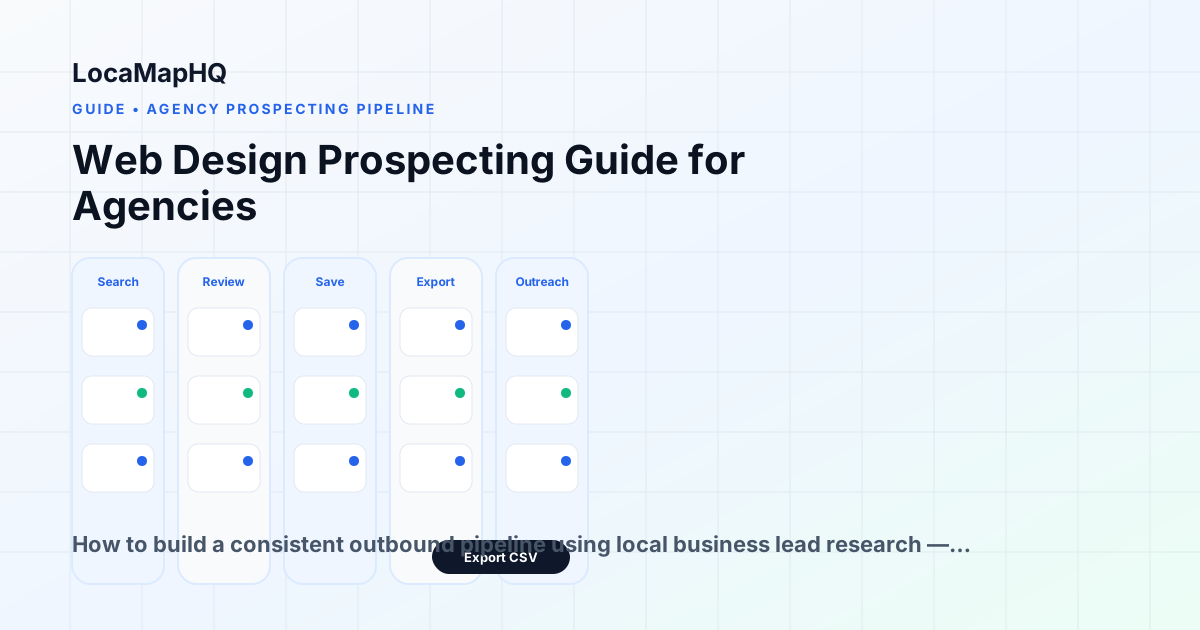
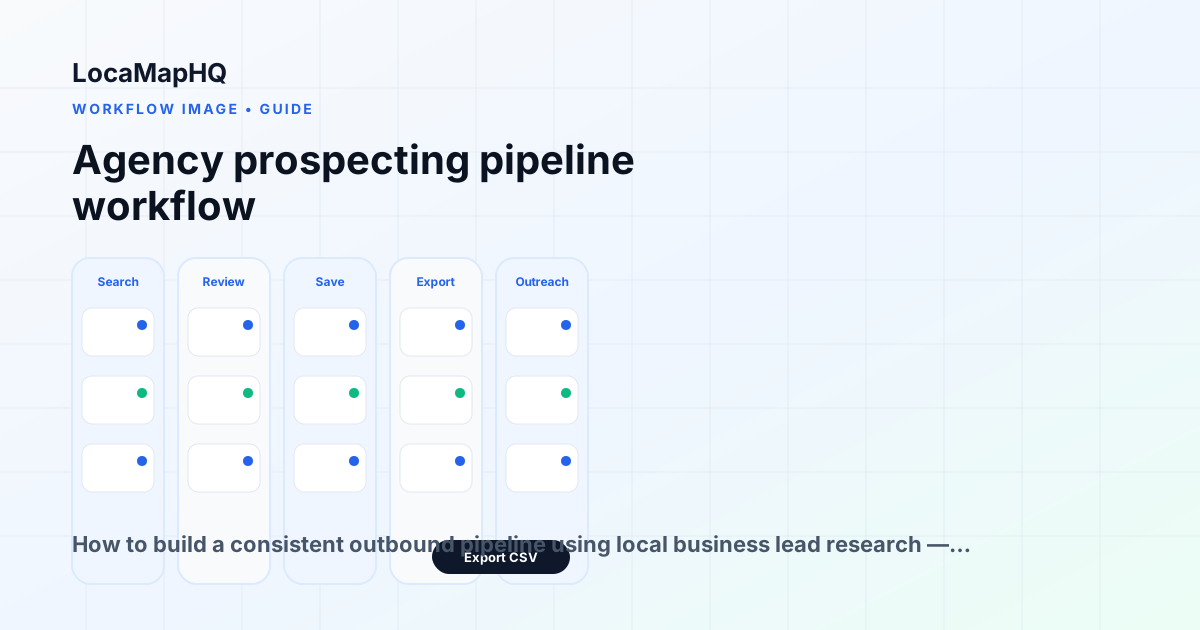
| Stage | Action | Output | Quality check |
|---|---|---|---|
| Search | Pick city and niche | Focused market | Not too broad |
| Review | Check website and local signals | Qualified candidates | Signal is visible |
| Save | Keep only good fits | Shortlist | Reason is noted |
| Export | Move to planning sheet | Clean list | Segments are separate |
| Outreach | Write signal-specific copy | Next action | No generic pitch |
Workflow for turning this guide into a prospect list
Use the article topic as a focused research lane: choose one city, one local business category, and one visible opportunity signal before saving prospects. The goal is a reviewed list with notes, not a raw export. Keep no-website, weak-website, local SEO, and niche-fit opportunities separated so the follow-up angle stays specific.
Lead quality checklist for this topic
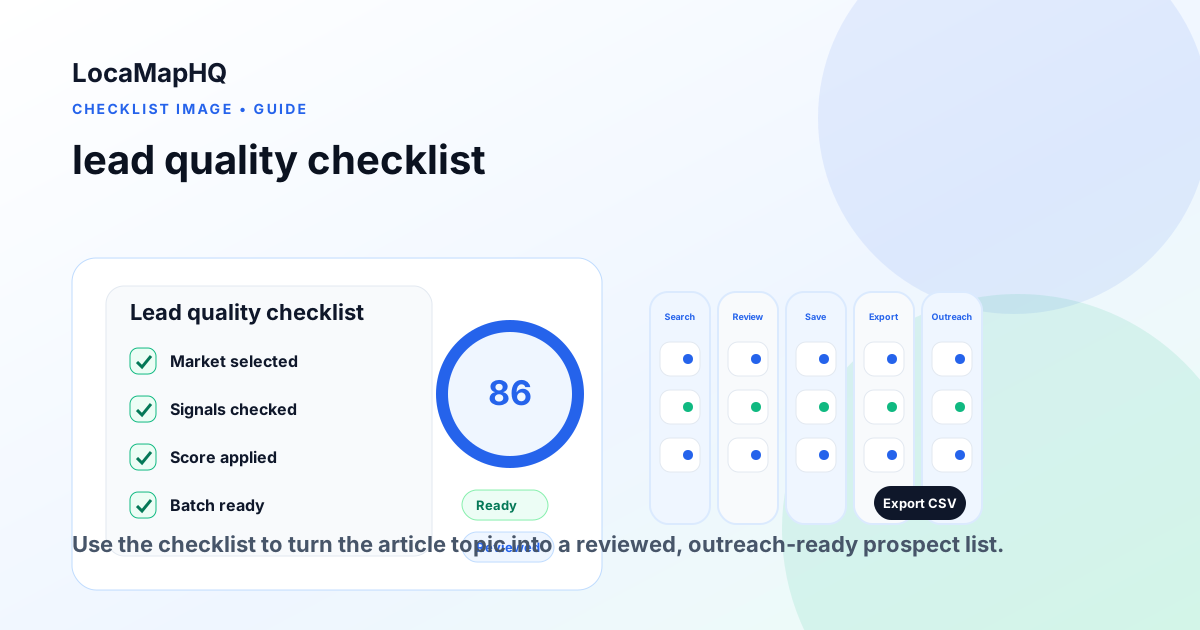
Before a business enters an outreach batch, confirm that the signal is visible, relevant, and tied to a service your agency can provide. Look for active businesses, clear contact paths, strong reviews or local demand, and a gap you can explain without overstating outcomes.
Key takeaways
- Start with one city, one industry, and one visible opportunity signal.
- Review each business before outreach so the list stays relevant and respectful.
- Use LocaMapHQ to support search, saving, and export while keeping final qualification decisions in your workflow.
Frequently asked questions
What is web design prospecting?
Web design prospecting is the process of finding businesses that may need a new website or redesign, then reviewing them for fit before outreach.
Which signals should web design agencies review?
Useful signals include no website, outdated design, poor mobile experience, weak service pages, strong reviews with a weak web presence, and clear contactability.
Can LocaMapHQ guarantee web design clients?
No. LocaMapHQ helps with local business research, saving, and export. Client acquisition depends on targeting, offer, outreach quality, timing, and follow-up.
Conclusion
Strong local prospecting comes from focused research, careful review, and a list your team can act on. Use the workflow above to narrow the market, identify relevant signals, and prepare cleaner outreach batches without assuming that any tool can guarantee outcomes.
Build your prospecting pipeline
LocaMapHQ gives web design agencies the research tool for this workflow. Search any city and industry, review opportunity signals, and export qualified prospect lists.