
Outreach Lists
Local Lead List Quality Checklist
This guide is for outbound agencies and consultants turning research into respectful sales activity who need a practical way to turn local lead list quality checklist into a reviewed local prospecting workflow. The common pain is simple: even a strong prospect list performs poorly when messages are generic, non-compliant, or disconnected from the observed signal. The goal is a safer outreach plan where each contact attempt is grounded in a verified business reason and clear opt-out expectations.
Direct answer: A good outreach list is not just contact data. It is a reviewed set of businesses where your team has documented a relevant signal, selected the right offer, and prepared a compliant message that explains why the contact is reasonable. Use the process below as decision support, not as a promise of replies, rankings, clients, or revenue.
Executive summary
The short version for local lead list quality checklist
Quick answer
A good outreach list is not just contact data. It is a reviewed set of businesses where your team has documented a relevant signal, selected the right offer, and prepared a compliant message that explains why the contact is reasonable.
Working definition
In LocaMapHQ, this topic is treated as a reviewed agency workflow: choose a market, identify public business signals, validate the opportunity manually, save useful notes, and export only records with a clear next step.
Decision framework
Use signal, fit, permission/compliance, and follow-up readiness as the four checks before outreach begins.
When not to use this approach
Do not use this workflow for guaranteed outcomes, private data collection, automated outreach decisions, or campaigns where your team cannot verify the reason for contacting a business.
- Key takeaway: start narrow so each prospect can be reviewed with context.
- Quality bar: every exported row should have a visible signal, fit note, and next action.
- Human review: final outreach, compliance, and fit decisions stay with your team.
- Best next step: run one focused city-and-industry test before scaling the workflow.
Why a quality checklist prevents wasted outreach
The most common reason local business outreach underperforms is not bad messaging or wrong pricing — it is bad list quality. When your outreach list includes businesses that are closed, too small, already working with a competitor, or simply not a fit for your services, even the best-crafted message will not convert. A quality checklist applied before outreach begins ensures that every business you contact has a genuine reason to be on your list.
This guide provides a comprehensive quality checklist for local business lead lists, covering minimum criteria for each data field, how to verify business activity, when to re-evaluate your list, and the most common quality mistakes agencies make.
Pre-outreach quality checks: the complete checklist
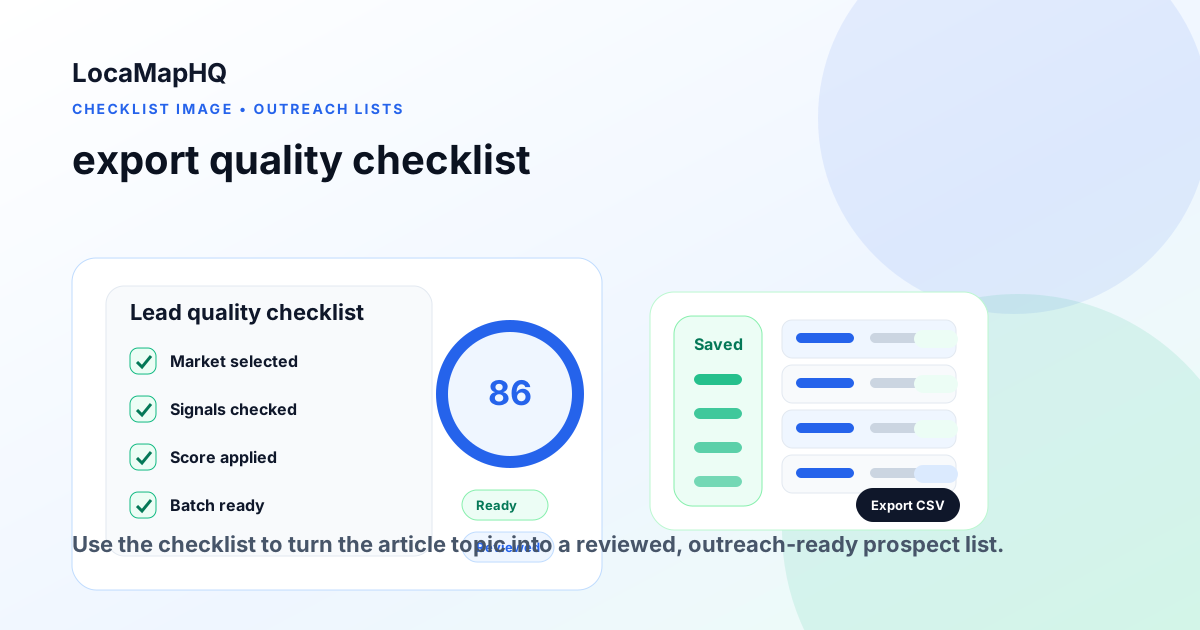
Before sending any outreach message, verify each prospect against these criteria:
Business existence and status
- The business is not marked as "Permanently Closed" on Google Maps
- The business has a valid Google Maps listing with a complete address
- The business listing is not a duplicate — you are contacting the primary listing only
- The business name matches across Google Maps and any other platforms you checked
Activity and demand signals
- Review count meets your minimum threshold (30 or more recommended)
- Average rating is 4.0 or higher
- The most recent review is within the last 6 months
- Review velocity suggests consistent customer flow
Contact information quality
- A phone number is listed and appears to be a local or mobile number
- An email address is available, or phone outreach is feasible as an alternative
- The contact information appears current
Opportunity signal verification
- The specific gap you serve is confirmed: no website, outdated website, weak local SEO, etc.
- The gap has not been recently fixed — check if the business has launched a new site since you first identified them
- The opportunity signal is relevant to the services you offer
Fit and eligibility
- The business is in your target geography
- The business is in an industry you are equipped to serve
- The business is not a national chain or franchise with centralized marketing decisions
- The business is not already an existing client
Minimum criteria for each data field
Set minimum acceptable values for each data field in your lead list:
- Business name: required — must match the Google Maps listing exactly
- Address: required — confirms the business has a physical location
- Phone number: required — at least one valid contact method is essential
- Review count: minimum 20 (30+ preferred for priority outreach)
- Rating: minimum 3.8 (4.0+ preferred)
- Website URL: required if your service is website redesign; must be absent if your service targets businesses without websites
- Industry/category: required — must match your target industry list
- City and state: required — must match your target geography
How to verify business activity
A business that appears on Google Maps may not be actively operating. Verify with these steps:
- Check review recency: the most reliable indicator of activity is recent customer reviews. A business with reviews in the last 3 months is almost certainly operating.
- Check Google Maps status: look for "Permanently Closed" or "Temporarily Closed" notices.
- Visit the website (if available): a website with current content confirms active operations. A website with a copyright date from 2016 may indicate a dormant business.
- Check social media: a business with recent social media posts is actively operating.
- Call the phone number: if you are uncertain, a quick call can confirm whether the business is still operating.
Re-evaluation process: when to refresh your list
- Weekly: remove businesses that have been contacted 4 or more times without response. Move them to an archive for revisiting in 6 months.
- Monthly: re-check the opportunity signal for businesses on your list for 30+ days. Has the business launched a website? Update accordingly.
- Quarterly: run a full quality pass on your entire active list. Remove businesses that no longer meet your criteria. Add new prospects to replace them.
Common quality mistakes agencies make
- Adding businesses without verifying the opportunity signal: a business that had no website when you found them may have launched one last week.
- Not checking for duplicates: the same business may appear under slightly different names. Reaching out twice damages credibility.
- Including national chains: franchise locations do not make independent marketing decisions.
- Keeping stale prospects too long: a business on your list for 6 months without response is unlikely to convert.
- Not updating outreach status: if you do not track who you have contacted, you will lose track of follow-ups.
- Confusing quantity with quality: a list of 500 businesses where half are unqualified is worse than a list of 100 where every business meets your criteria.
How LocaMapHQ helps you maintain lead list quality
LocaMapHQ helps you identify local businesses by city and industry with the key data points you need for quality checks — review count, rating, website status, phone number, and business address — all in a single interface. The platform helps you apply qualification filters consistently, organize prospects into saved lists, and export clean data for your outreach workflow.
By centralizing your prospect research, LocaMapHQ helps you avoid the most common quality mistakes. See the features page for the full set of tools, or start a free account to build a cleaner lead list.
FAQ: Local lead list quality
How often should I audit my lead list for quality?
Review your lead list for stale data every 60–90 days for businesses that have not yet been contacted, and immediately after each outreach campaign for businesses that responded (remove them from the active list and move to appropriate pipeline stages). A quarterly review of the entire list removes permanently closed businesses, businesses that have significantly changed, and businesses you have learned are not a good fit for your service.
Is a smaller, highly-qualified list better than a larger, less-qualified one?
Yes. Consistently. A list of 50 carefully qualified prospects with personalized outreach almost always produces better outcomes than a list of 500 loosely qualified prospects with generic outreach. The quality investment pays off in higher response rates, better conversations, and more efficient use of follow-up time. Volume alone does not compensate for poor qualification.
Should I remove businesses from my list if they do not respond after one campaign?
Not immediately. Businesses that did not respond to one campaign are still qualified prospects — they may have been busy, may have changed their situation, or may respond to a different message angle. Move non-responders to a nurture segment and re-contact after 90 days with different messaging. Only remove businesses from the active list if they have become unqualified (closed, changed niche, already have a good website).
Build a cleaner, higher-quality lead list
LocaMapHQ helps you find, filter, and verify local business prospects — so every business on your list is worth contacting.
Related reading
Practical block
Export quality block
| Field | Why it matters | Before export | After export |
|---|---|---|---|
| Business name | Identifies record | Remove duplicates | CRM/company field |
| Signal | Explains fit | Add short note | Outreach angle |
| Category | Segments list | Confirm niche | Campaign grouping |
| Contact path | Supports action | Check availability | Next step |
Decision framework for this topic
Use signal, fit, permission/compliance, and follow-up readiness as the four checks before outreach begins.
A practical prospecting workflow should answer five questions before anything is exported: which market are we researching, which visible signal matters, how will we verify it, what segment will the business enter, and what next action is appropriate? This keeps the article useful for real agency operations rather than turning it into a keyword page.
If you are still shaping the workflow, start with the LocaMapHQ feature overview, then compare the process with the prospecting checklist and the lead qualification worksheet. Teams that need a product step can move from research into dashboard search, while technical teams can review the API documentation before building a custom workflow.
| Gate | Question | Action |
|---|---|---|
| Market | Does this city, niche, or category match the service you sell? | Keep only focused markets. |
| Signal | Is there a visible reason to review the business? | Document the signal in plain language. |
| Fit | Can your offer plausibly help without exaggerating outcomes? | Segment by offer fit. |
| Action | Can your team take a respectful next step this week? | Export only actionable records. |
Workflow to apply
- Segment prospects by reason for outreach.
- Write one message per segment.
- Include a clear identity and opt-out path where required.
- Track responses and remove poor-fit segments.
- Feed learnings back into future searches.
Original LocaMapHQ methodology
Information gain framework for Local Lead List Quality Checklist
Short definition: The Agency Outreach Readiness Score is LocaMapHQ’s editorial method for deciding whether a prospect segment is ready for respectful outreach planning.
Executive summary: For outbound agencies and consultants turning research into respectful sales activity, the useful question is not “can we export more businesses?” It is “which businesses have enough visible evidence, offer fit, and actionability to deserve the next review step?” Use this framework to make local lead list quality checklist decisions more consistent across reviewers.
Prospect Priority Matrix
Score each prospect from 1–5 in four categories. Prioritize records where at least three categories score 4 or higher.
| Score area | What to check | High score means |
|---|---|---|
| Visible need | Website, profile, review, CTA, or local presence gap | The gap can be explained clearly |
| Business value | Niche economics, service value, competitive market | The business can plausibly benefit |
| Offer fit | Match between your service and observed signal | Your offer is relevant without exaggeration |
| Actionability | Contact path, notes, compliance, next step | The team can act this week |
Decision tree
- 1. Market fit: Does the city and niche match your offer? If no, do not export.
- 2. Signal fit: Is there a visible website, local SEO, listing, or trust gap? If no, keep researching.
- 3. Business fit: Does the business appear active and commercially relevant? If no, remove it.
- 4. Outreach fit: Can your team explain the observation respectfully? If no, save for research only.
- 5. Export decision: Export only records with a clear note, segment, and next action.
LocaMapHQ proprietary scoring library
These scores are LocaMapHQ editorial methodologies for reviewing local business opportunities. They are designed to make agency research more consistent, not to predict purchase intent or campaign outcomes.
| Framework | Scoring criteria | Interpretation | Limitations | Best use cases |
|---|---|---|---|---|
| LocaMapHQ Opportunity Score | Visible need, business value, offer fit, actionability, and reviewer confidence. | 80–100 means prioritize for manual review; 60–79 means keep in research; below 60 means do not export yet. | It is an editorial prioritization score, not a prediction of buying intent, replies, revenue, rankings, or campaign performance. | Comparing businesses inside the same city and niche after a reviewer has documented the visible signal. |
| Website Opportunity Score | Website presence, mobile experience, CTA clarity, service depth, trust signals, and speed/performance review. | High scores suggest a clearer website audit or redesign conversation; low scores may mean the website is adequate or the business context is unclear. | A website gap does not prove budget, urgency, or willingness to buy. Agencies should still verify fit and timing. | Web design, redesign, conversion, mobile, and trust-signal prospecting workflows. |
| Digital Visibility Score | Google Business Profile completeness, review depth, review recency, local page relevance, website consistency, and category fit. | High scores indicate a business may deserve a local visibility diagnostic; mixed scores should stay in research. | Public visibility signals do not prove rankings or search demand and should not be used to promise outcomes. | Local SEO, GBP optimization, local content, and reputation-process research. |
| Prospect Readiness Score | Segment clarity, contact path, specific note, compliance review, owner assigned, and next action. | A prospect is ready only when the team can explain why it is on the list and what respectful next step follows. | Readiness is operational. It does not mean the prospect is ready to buy. | Deciding whether a saved record should move from research to outreach planning. |
| Outreach Difficulty Score | Message specificity, proof needed, compliance sensitivity, competition level, category complexity, and personalization effort. | Higher difficulty means the segment needs more research, a softer offer, or a diagnostic-first message. | Difficulty can change by market, offer, and sender reputation; it should be reviewed after every campaign. | Choosing between outreach segments when the team has limited weekly capacity. |
| Business Modernization Score | Website currency, booking/contact flow, local profile quality, content freshness, trust proof, and operational fit. | High scores suggest the business may benefit from modernization planning; low scores may already have adequate digital basics. | Modernization should be framed as an audit opportunity, not a claim that the business is behind or failing. | Consultants and agencies packaging website, local SEO, and conversion improvements into a practical diagnostic. |
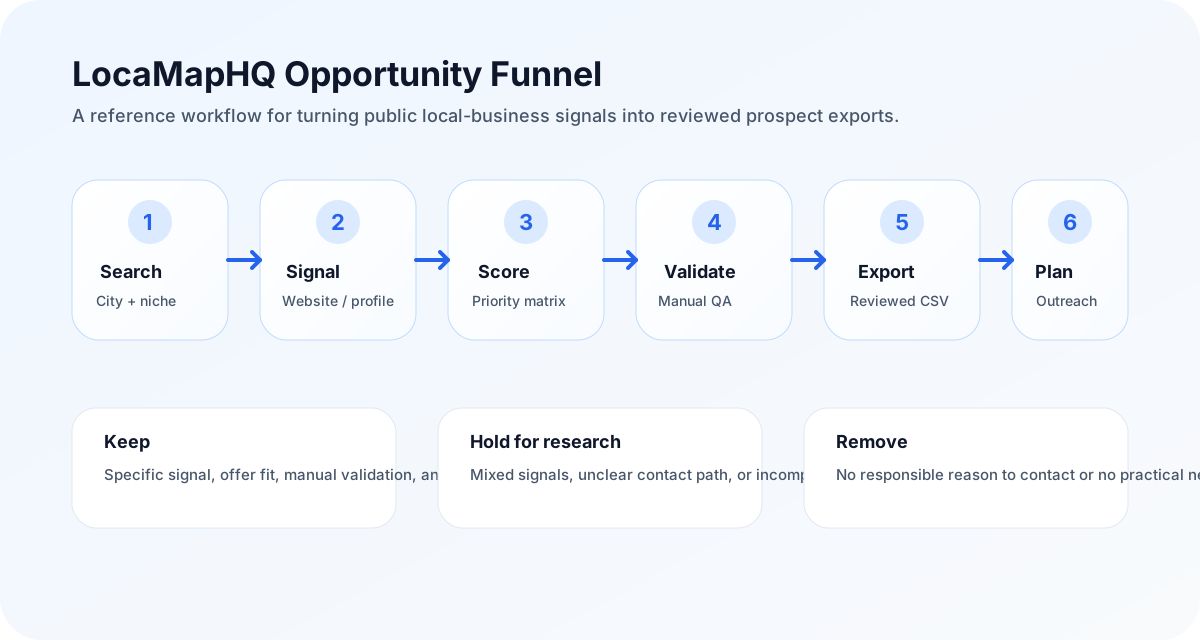
Qualification flowchart
Use this as the review path before a prospect moves from discovery into an outreach-ready export.
Search city + niche
Identify visible signal
Score opportunity
Validate manually
Export reviewed segment
If a business fails any step, keep it in research or remove it. The goal is not maximum export volume; the goal is a list your team can explain and use responsibly.
| Workflow option | Pros | Cons | Best for | Time required | Manual alternative | Automation level | Skill required | Expected outcome |
|---|---|---|---|---|---|---|---|---|
| Manual research | Flexible and easy to start | Slow, inconsistent, and easy to over-export | One small market or a one-off validation pass | Hours per city/niche batch | Maps tabs, website checks, and a spreadsheet | Low | Research discipline and spreadsheet hygiene | A manually reviewed sample list |
| LocaMapHQ workflow | Structured search, saving, notes, scoring, and export | Still needs human qualification and compliance review | Repeatable city, industry, save, review, and export workflows | Minutes to build a candidate batch, plus review time | Recreate the same workflow in Sheets | Medium | Agency targeting and offer-fit judgment | A cleaner qualified prospect segment |
| Custom API workflow | Fits internal systems and custom reporting | Requires technical setup and internal QA | Teams that need prospecting data inside an existing system | Implementation project plus recurring QA | Manual import/export process | Higher, depending on integration | Developer resources and data QA process | A controlled internal prospecting workflow |
When to use LocaMapHQ
Use LocaMapHQ when you need a reviewed list with clear signals, segments, and notes before writing outreach.
When not to use it
Do not use it to automate contact decisions, ignore compliance, or send generic messages to every exported row.
Manual alternative
The manual alternative is building a spreadsheet, writing notes in separate docs, and manually deciding which segment is actually ready.
Educational case studies, not customer claims
These examples are realistic training scenarios for agency teams. They are not real customers, results, or performance claims. Use them to teach reviewers how to connect visible signals to a safer next workflow.
Example Plumbing Company
- Initial state
- Active local service company with emergency jobs, several recent reviews, and a thin website with no clear estimate path.
- Website issues
- Mobile page loads slowly, services are grouped onto one generic page, and the quote CTA is buried below the fold.
- Google Business Profile observations
- Public profile appears active, but review recency and service coverage should be checked manually before outreach.
- Why it scores well or poorly
- Scores well on business value and visible website need, but outreach difficulty is medium because emergency-service messaging must be specific and respectful.
- Recommended outreach
- Offer a short website and quote-flow review focused on helping visitors find the right service page and contact path.
- Expected workflow
- Save as web design + conversion review, add a note about mobile CTA clarity, export only after checking the website and contact route.
Example Dental Clinic
- Initial state
- Established clinic with strong reputation signals but thin treatment pages and inconsistent appointment messaging.
- Website issues
- Service pages lack patient-focused explanations, trust proof is scattered, and booking options are not consistently visible.
- Google Business Profile observations
- Review depth may be strong, but category fit, location relevance, and appointment information should be verified.
- Why it scores well or poorly
- Scores well on business value and modernization potential; outreach difficulty is higher because healthcare messaging requires extra care.
- Recommended outreach
- Offer a patient journey and local visibility review rather than promising new patients or rankings.
- Expected workflow
- Save as local SEO + website trust review, verify service pages, and prepare a diagnostic-first message.
Example Roofer
- Initial state
- Seasonal high-value contractor with visible local competition and mixed website quality.
- Website issues
- Project proof is limited, service-area pages are thin, and the request-estimate path is unclear on mobile.
- Google Business Profile observations
- Review count and recency should be compared against nearby competitors before assigning priority.
- Why it scores well or poorly
- Scores high when reviews, service value, and website gaps align; scores lower if contactability or business activity is unclear.
- Recommended outreach
- Offer a service-area and estimate-flow audit with examples from public pages, not a guarantee of leads.
- Expected workflow
- Save as high-value home service segment, compare local competitors manually, then export a small reviewed batch.
Example Restaurant
- Initial state
- Local restaurant with active reviews but an outdated menu experience and inconsistent hours across public references.
- Website issues
- Menu is hard to read on mobile, ordering/reservation paths are unclear, and event or catering pages are missing.
- Google Business Profile observations
- Hours, location, menu links, and review recency need validation because restaurant data changes quickly.
- Why it scores well or poorly
- Scores well for practical modernization if the restaurant is active; outreach difficulty rises if margins or seasonality are uncertain.
- Recommended outreach
- Offer a menu, hours, and mobile conversion cleanup review rather than a broad marketing pitch.
- Expected workflow
- Save as website update segment, verify menu/hours, and use a narrow operational improvement angle.
Example Law Firm
- Initial state
- Professional service firm in a competitive market with unclear intake flow and thin practice-area content.
- Website issues
- Practice pages are generic, attorney trust proof is limited, and consultation CTAs are inconsistent.
- Google Business Profile observations
- Practice area, location, review context, and advertising sensitivity should be manually reviewed.
- Why it scores well or poorly
- Scores high on business value but outreach difficulty is high because legal services require precise, conservative language.
- Recommended outreach
- Offer a trust, intake, and practice-page diagnostic without implying legal marketing guarantees.
- Expected workflow
- Save as professional-services diagnostic, verify practice fit, and keep outreach educational and compliance-aware.
Agency priority playbook
Prioritize first
High-value service categories where the visible problem maps directly to your offer and can be verified quickly.
Keep in research
Businesses with mixed signals, unclear contact paths, stale profile details, or a weak connection between the signal and your offer.
Do not export yet
Records with no specific reason for outreach, uncertain business activity, sensitive claims your team cannot support, or no responsible next action.
Editorial opinion: agencies usually get more reference value from a smaller list with strong notes than a large export that forces generic outreach. The operational advantage is not just speed; it is clearer judgment.
Interactive review checklist
Expand each checkpoint before exporting a segment. This uses native HTML so it works without extra JavaScript.
Daily workflow
Pick one city and one niche, review visible signals, save only records with a specific note, and remove rows that cannot be explained.
Weekly workflow
Compare segments, export only the batch your team can review, prepare compliant messaging, and document what the first outreach pass teaches.
Monthly workflow
Review which niches produced useful conversations, which signals were noisy, and whether scoring rules need to change.
Team handoff
Give the next owner the segment, score, proof point to verify, recommended angle, compliance status, and next action.
Recovery process
If a campaign underperforms, inspect the search criteria, segment quality, message specificity, proof point, and follow-up process before increasing volume.
Downloadable worksheets
These templates are simple CSVs so an agency can use them in Sheets, Excel, Airtable, or a CRM import workflow.
Authority sources to validate with
Use official sources when a page makes claims about search quality, business profiles, speed testing, compliance, or market context. These sources do not replace your own review, but they keep the workflow grounded in reliable references.
Validation checklist before outreach
- The business appears active and relevant to the city/niche being researched.
- The visible signal is specific enough to explain without exaggeration.
- The website, profile, or listing information has been manually spot-checked.
- The offer matches the observed issue and the likely business context.
- The record has a practical next action and a segment label.
- The outreach plan accounts for applicable law, consent, and opt-out expectations.
Assumptions and limitations
- Scores are editorial decision aids, not objective predictions.
- Public business signals can be stale, incomplete, or misinterpreted without manual review.
- Outreach decisions should account for applicable laws, platform rules, consent, and opt-out expectations.
- LocaMapHQ helps organize research; it does not guarantee leads, clients, revenue, rankings, or response rates.
Signals and tradeoffs to review
Information gain comes from the review step. Instead of relying on a single datapoint, compare several signals and decide whether they point to the same opportunity. If they conflict, slow down and keep the record in research instead of moving it directly into outreach.
- Specific research note
- Relevant offer fit
- Valid contact path
- Market/niche priority
- Outreach capacity
- Compliance review complete
Limitation: LocaMapHQ supports research and export planning; it does not guarantee replies, appointments, revenue, or compliance for your campaigns. That is why the final decision should stay with a human reviewer who understands the client offer, the market, and the outreach rules.
Mistakes to avoid
- Sending generic mass messages
- Skipping opt-out requirements
- Using stale exports
- Contacting businesses with no relevant reason
Field notes for agency teams
The most useful lists tend to include fewer rows and better notes. A note like “no website listed, 46 recent reviews, high-value emergency service, verify contact page before outreach” is more useful than a spreadsheet with hundreds of businesses and no reason for inclusion. Notes also protect the team from repetitive messaging because each segment has a clear angle.
Review the first exported batch manually before scaling. If more than a third of the records require heavy cleanup, the search was too broad. If every record uses the same reason for outreach, the segment may be strong. If no record has a specific reason, the list should not move into outreach yet.
For deeper context, pair this guide with the complete website audit checklist, the local SEO audit checklist, and the prospecting tracker template. If the workflow fits your team, review pricing and credits or create an account to try the local prospecting workflow.
Sources and editorial notes
These references support the article’s approach to people-first content, public business research, platform policy awareness, and safer agency workflows.
- Google Search Central: creating helpful, reliable, people-first content — Used as the editorial standard for usefulness, originality, and reader-first structure.
- Google SEO Starter Guide — Supports clear titles, descriptions, crawlable links, and helpful page organization.
- U.S. Census Business Dynamics Statistics — Useful context for small-business market research and business formation trends.
- FTC CAN-SPAM Act compliance guide — Reference for commercial email requirements in the United States.
Related guides, templates, and next steps
Checklists and templates
Money pages
Learn pages and resources
When the research direction is clear, move naturally from education to action: run a focused search, qualify the saved businesses, export the reviewed segment, and compare the workflow against your current spreadsheet or manual research process.
Key takeaways
- Start with a focused market, offer, and visible signal instead of a broad export.
- Use the decision frame: Use signal, fit, permission/compliance, and follow-up readiness as the four checks before outreach begins.
- Document why each business stayed on the list so outreach can stay specific and respectful.
- Keep human review in the workflow; prospecting signals do not guarantee replies, revenue, rankings, or clients.
Recommended next workflow
Use this article to build one reviewed prospecting batch: choose a market, identify the visible signal, save only relevant businesses, add notes, and export the segment your team can act on this week. For this topic, the recommended decision frame is: Use signal, fit, permission/compliance, and follow-up readiness as the four checks before outreach begins. The common mistake is exporting too early and forcing outreach to fix weak qualification.
LocaMapHQ helps organize local business research and exports. It does not guarantee performance outcomes, and your team should still review fit, compliance, offer, and messaging before outreach.
Why use LocaMapHQ here?
It keeps the search, save, qualification notes, and CSV export workflow in one place so the team is not rebuilding the same spreadsheet process every week.
Who benefits most?
outbound agencies and consultants turning research into respectful sales activity who already know their offer and need a cleaner way to research local markets.
When should you stay manual?
Use a manual spreadsheet first if you are still defining your ICP, testing one tiny market, or need a one-off research pass.
What happens after export?
Review the CSV, remove weak-fit records, segment the list, prepare compliant messaging, and track what your team learns from the campaign.
Related local lead guides
Frequently asked questions
These FAQs focus on agency workflow, local prospecting decisions, Google Maps research considerations, CSV export planning, and the limits of public business signals.
What should I check before sending outreach to my lead list?
Verify each prospect has: a clear opportunity signal (no website, outdated site), 30+ reviews, 4.0+ rating, recent review activity, a listed phone number, and is in an industry you serve. Remove any that do not meet all criteria.
How do I know if my lead list is high quality?
A high-quality list has 100% of prospects meeting your qualification criteria. If more than 20% of your list does not meet criteria, rebuild the list with tighter filters before starting outreach.
What is the minimum review count for a qualified lead?
30+ reviews is the minimum threshold for most agencies. This indicates an established business with active customer flow. Below 30 reviews, the business may be too new or inactive.
Should I include businesses without phone numbers?
Businesses without listed phone numbers are harder to reach. Include them only if you have alternative contact methods (email, social media). Phone-reachable prospects should be prioritized.
How often should I re-evaluate my lead list?
Re-evaluate before each outreach batch. Businesses may have closed, changed ownership, or built a website since you first researched them. A quick verification pass prevents outreach to stale or no-longer-qualifying prospects.